Symbolism and composition
The female figure, ornament, and the slow reading of Mucha's image
The longer we look at Mucha, the clearer it becomes that ornament is not background. It is an active part of expression, atmosphere, and meaning.
The figure is never isolated
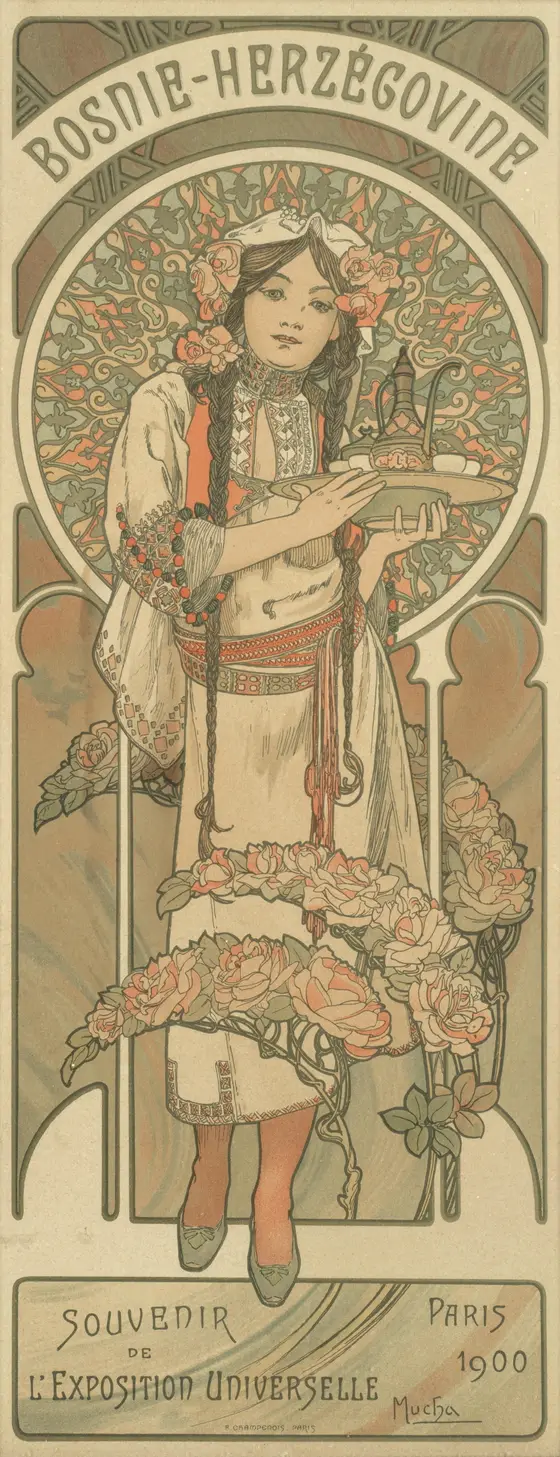
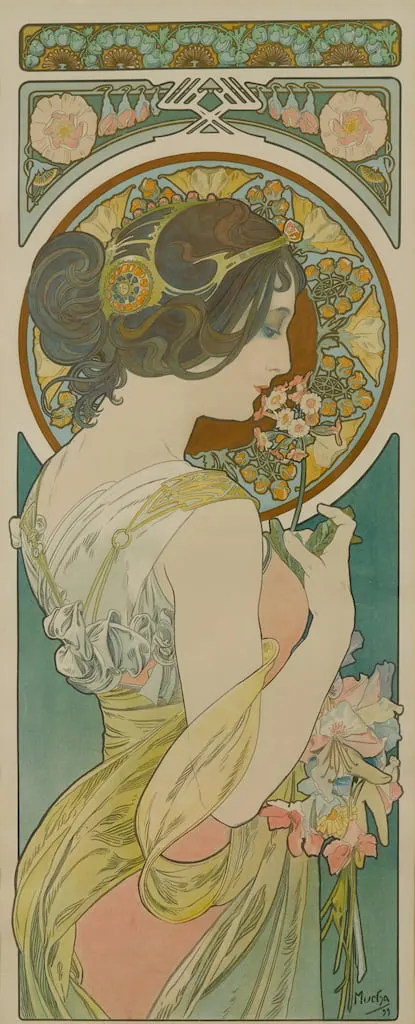
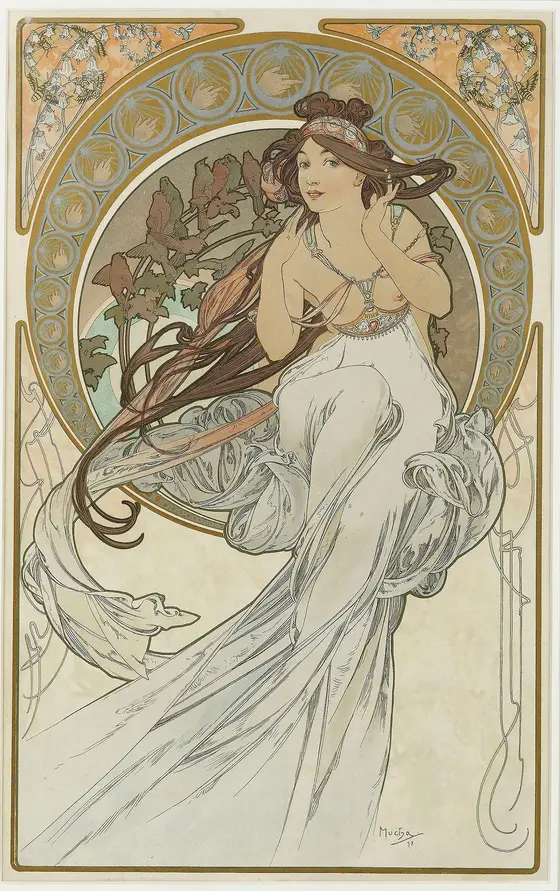
In Mucha, the female figure is rarely separated from frame, plant, textile, or circular motif. Everything behaves as one flowing system. The body does not stand in front of decoration as if decoration were optional background. The figure is generated through relation. Hair extends into line, line opens into halo, halo becomes an emblematic field. This is one reason his images resist quick reading and reward slower attention.
Ornament changes the tempo of looking
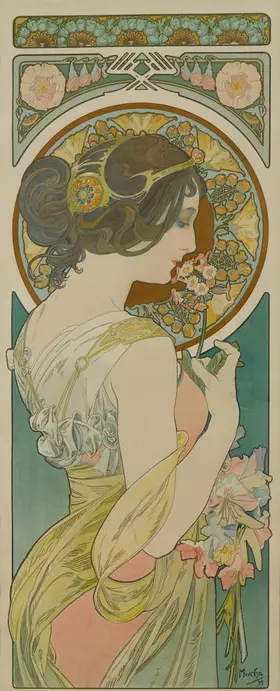
Ornament matters because it regulates time. A poster can seize the eye instantly, but ornament keeps the eye moving after first recognition. It produces return, drift, and re-reading. In a work like Primrose, the viewer does not simply identify a woman and a floral attribute. The eye is asked to circulate between face, gesture, contour, frame, and symbolic setting. Meaning emerges through that movement rather than through a single iconographic clue.
The decorative surface is also a symbolic surface
It is too weak to say that ornament here is beautiful. Ornament organizes atmosphere and gives the image a specific mode of seriousness. It can suggest ritual, seasonality, femininity, luxury, or cultural elevation without converting those ideas into literal narrative. Mucha’s decorative intelligence lies precisely in this ability to make symbolic meaning diffuse across the whole surface rather than storing it in one isolated emblem.
Why slow reading matters
This changes how we position Mucha historically. If we read the work too quickly, we see only style. If we stay with the image longer, we begin to see a sophisticated system for holding together body, mood, and symbolic environment. That is where Mucha exceeds a cliché understanding of Art Nouveau. He is not merely decorating the figure; he is building a world in which the figure becomes legible.
What the archive can add
This is exactly where the site can offer more than reproduction. A gallery page can identify title, date, medium, and source. An essay has to do something else: guide the act of looking, describe the internal structure of the image, and show why composition changes meaning. Without that deeper layer, Mucha is too easily reduced to surface charm.
Continue reading
More in this reading route
Series and decorative structure
The Seasons and serial rhythm
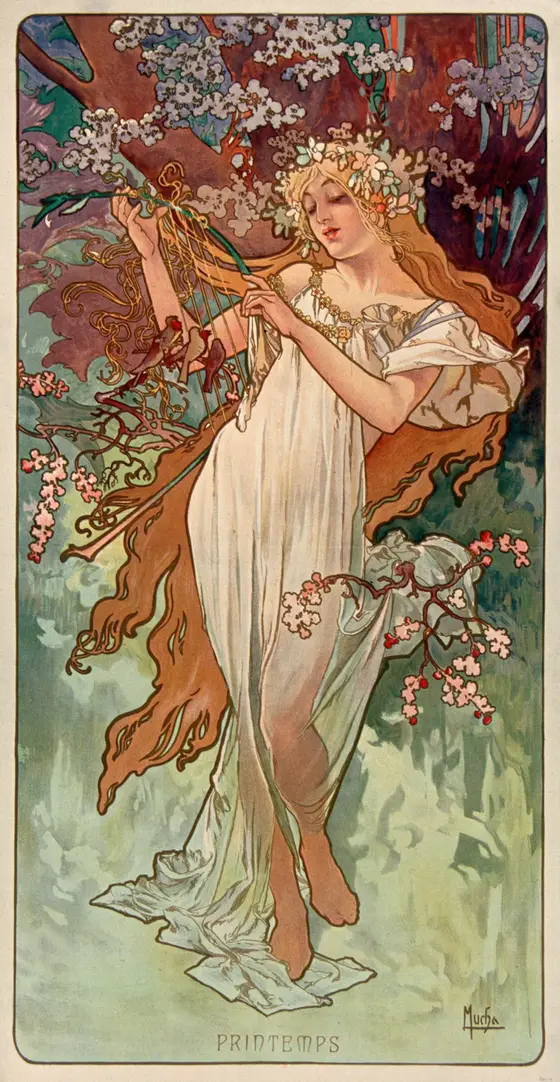
The Seasons matter because they show Mucha thinking in sequences. Each panel works alone, but the deeper effect comes from rhythm, variation, and return across the set.
Ornament and serial pairing
Decorative constellations and paired panels
Mucha's paired decorative panels matter because they show ornament working structurally, not as surface excess. Meaning emerges through echo, counterpart, and visual correspondence.