Public image and technology
After Paris: Mucha's late public image
The later Mucha does not abandon the public sphere. He returns to it differently, giving posters and publicity a slower authority than the Paris years required.
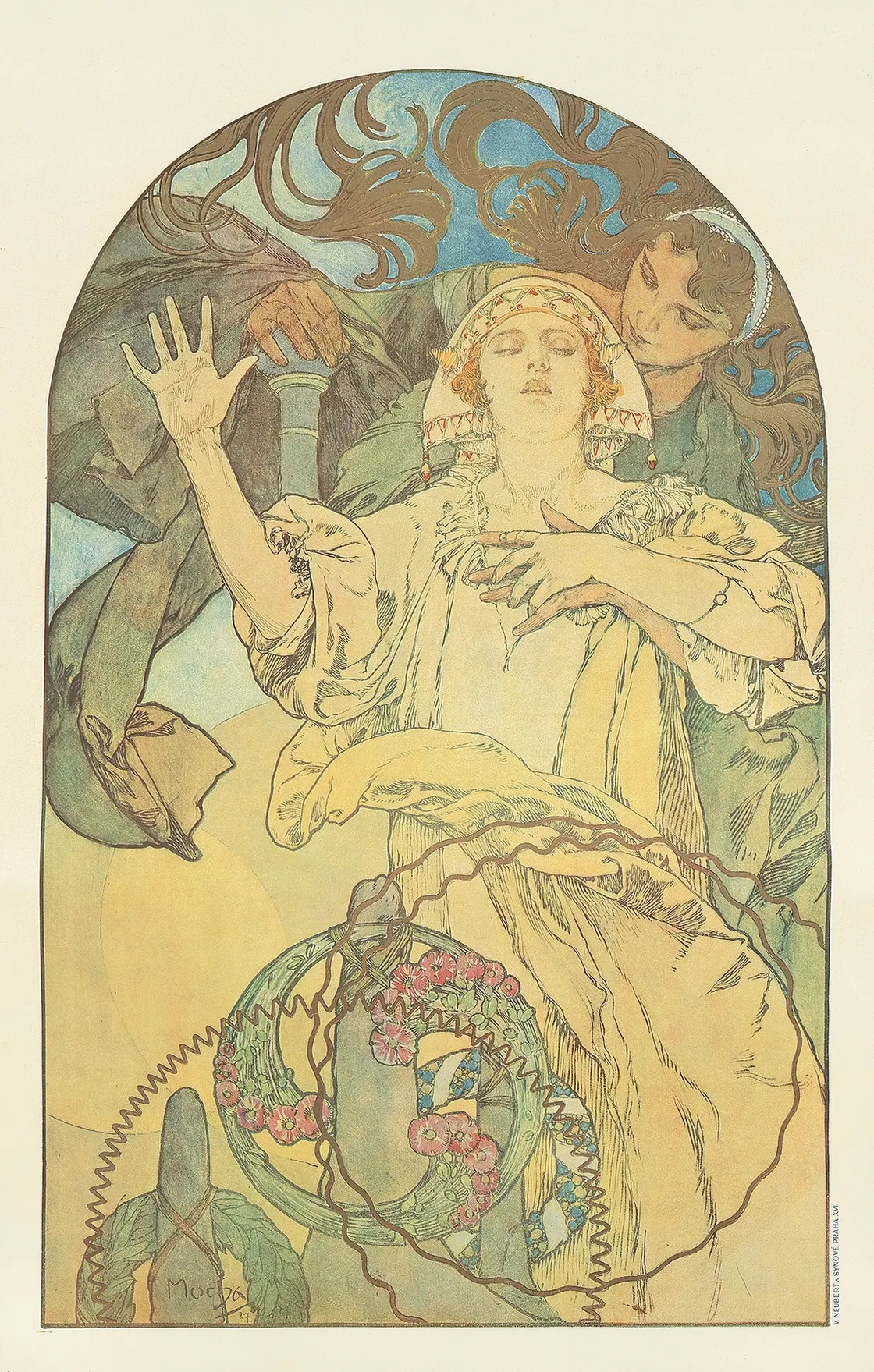
Publicity changes tone
The easy narrative says that Mucha moves from Paris advertising toward late monumentality and private national work. That story is true only in part. The later posters and promotional images show that he remains fully capable of addressing the public, but the tone becomes less urgent and more ceremonial. The image no longer rushes toward the passer-by with the same theatrical shock. Instead, it establishes authority through calm, framing, and measured dignity.
Technology inside a ceremonial frame
De Forest Phonofilm is crucial because it places a new medium inside an older discipline of visual authority. Innovation is not treated as raw novelty. It is organized, dignified, and made culturally presentable. The same is true, in another register, of works tied to performance or public appearance. Mucha knows how to make modern technology feel trustworthy by giving it visual form rather than advertising excitement alone.
Performance, prestige, and public legitimacy
That matters because public image is never neutral. A poster for a performer, a cultural occasion, or a technical innovation also distributes legitimacy. It tells viewers how seriously to take what they see. The later Mucha becomes especially interesting at this point: he retains the public reach of the poster while slowing its rhetoric. Instead of assaulting the eye, he stabilizes it. Instead of spectacle alone, he offers composure.
After Paris is not after publicity
This is why the later archive should not be read as a retreat from publicity. It is a redefinition of publicity. The Paris years perfected rapid recognition, star image, and commercial seduction. The later works redirect those skills toward cultural dignity, civic seriousness, and technological prestige. Continuity survives, but its emotional register changes.
Why the archive needs this distinction
Late public images belong in the same archive as the classic posters because they prevent a false split between an early commercial Mucha and a late serious Mucha. What changes is not his ability to speak publicly, but the rhythm and dignity of that speech. That is precisely the kind of distinction a gallery page can only hint at and an essay must fully unfold.
Continue reading
More in this reading route
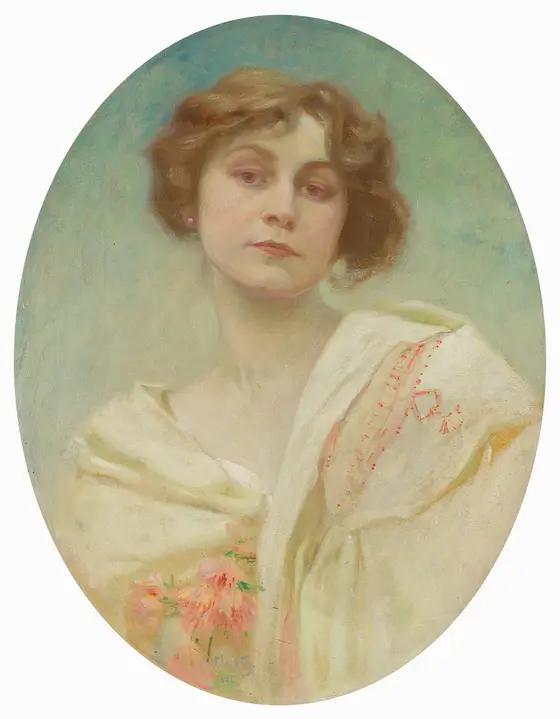
Identity and representation
Costume, portrait, and the staging of identity
In Mucha's later portraits, clothing is never only descriptive. It becomes a way of turning a sitter into a bearer of cultural memory and public meaning.
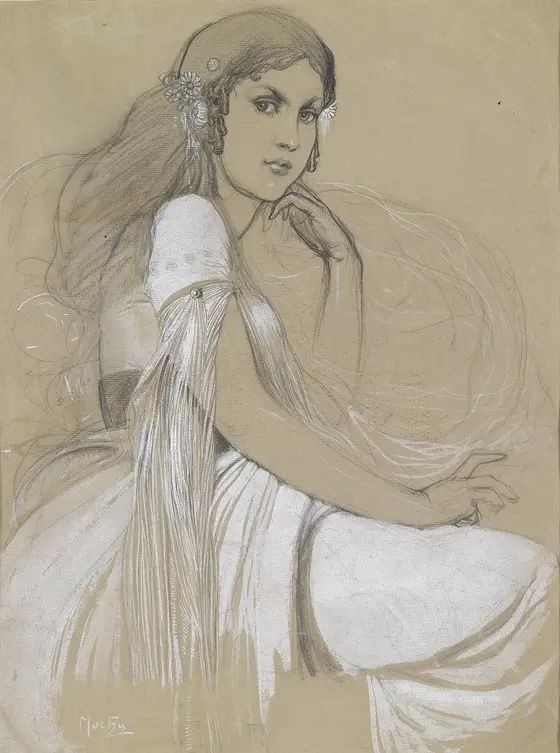
Late portraiture
Late Mucha and the turn toward private presence
Mucha's later work often matters most where it becomes quieter. The poster voice recedes and a more concentrated sense of presence begins to carry the image.
Related works
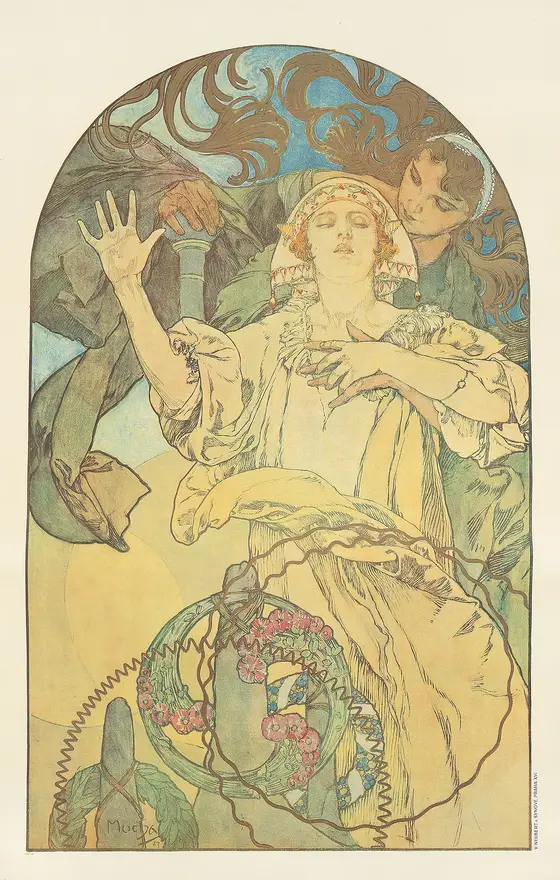
De Forest Phonofilm
A late technology poster in which modern sound cinema is filtered through Mucha's mature decorative authority.
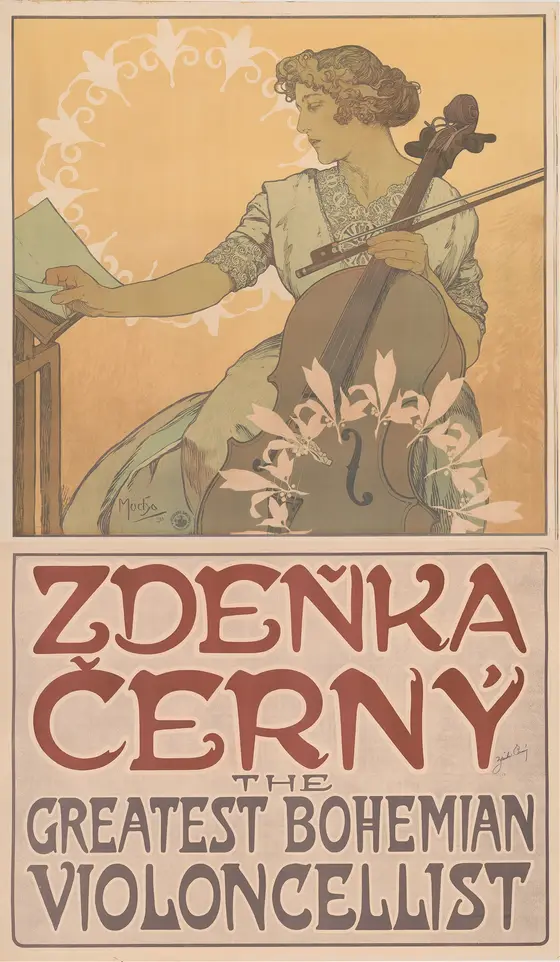
Zdenka Cerny, The Greatest Bohemian Violoncellist
A public musical portrait where the performer is given the dignity and stillness of Mucha's mature style.
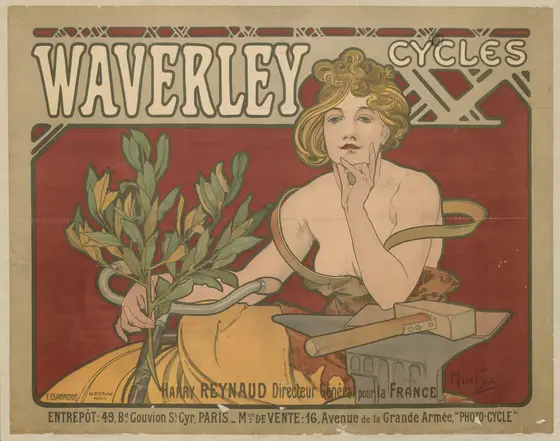
Waverley Cycles
Advertising in which a technical product becomes a broad theatrical image of motion and prestige.