Short object reading
Object note
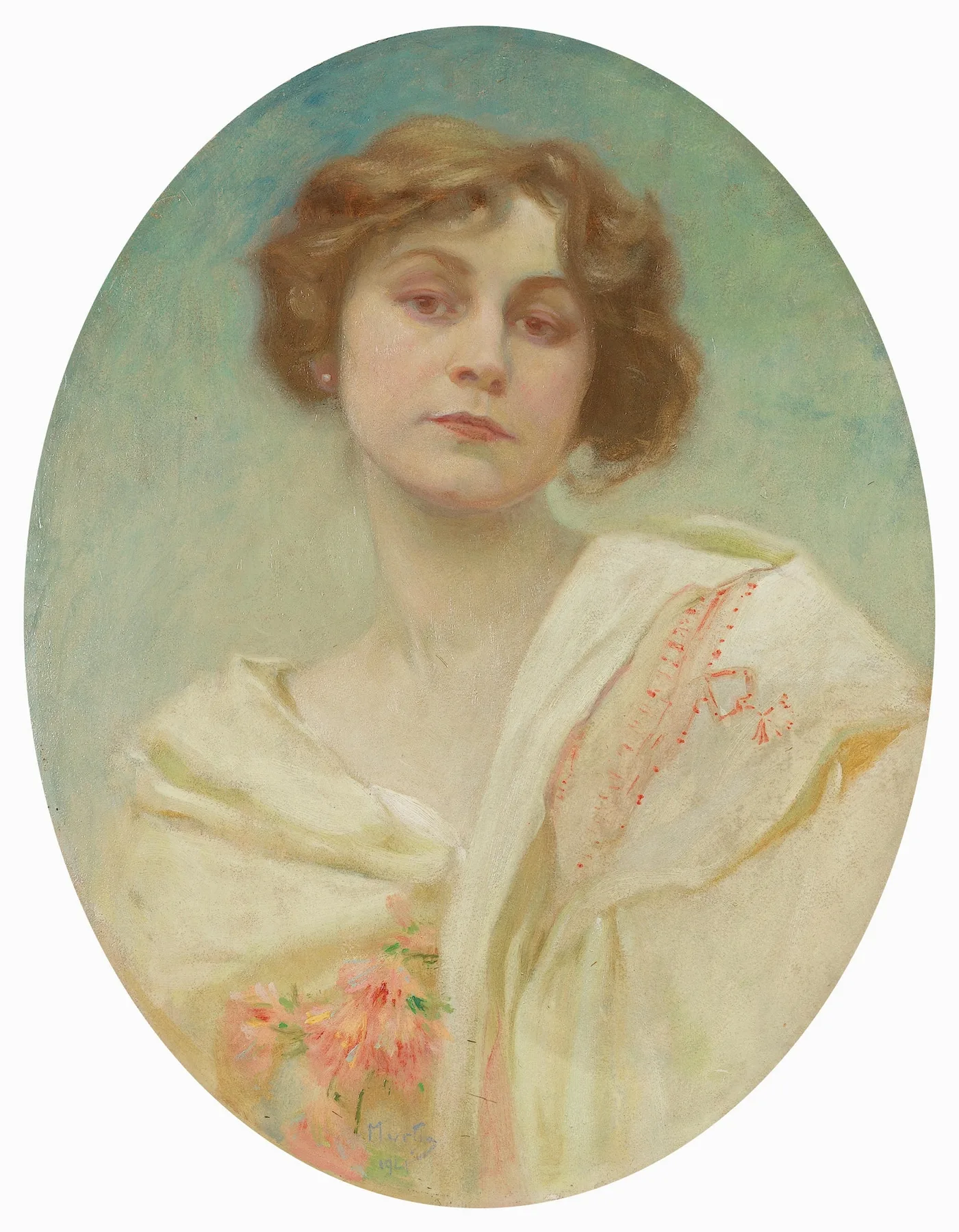
This page stays close to the sheet itself: composition, historical setting, and the work's place in the archive.
Visual reading
The sitter is held in a calm, frontal dignity. Mucha does not push the image toward spectacle. Instead he lets clothing, pose, and facial stillness work together, so that the portrait reads at once as a personal image and as a cultural statement.
Place in the archive
This work helps the site continue its move beyond the canonical Paris poster. It shows Mucha using some of the same gifts for stylization and ceremonial framing in a quieter, more inward register.
Archive note
Placed beside family portraits and late figure studies, the image helps define a later Mucha concerned with identity, costume, and the ethics of presence rather than only public advertisement.
Go deeper
Related essays
These essays step back from the sheet and open the broader argument around medium, public role, and curatorial context.
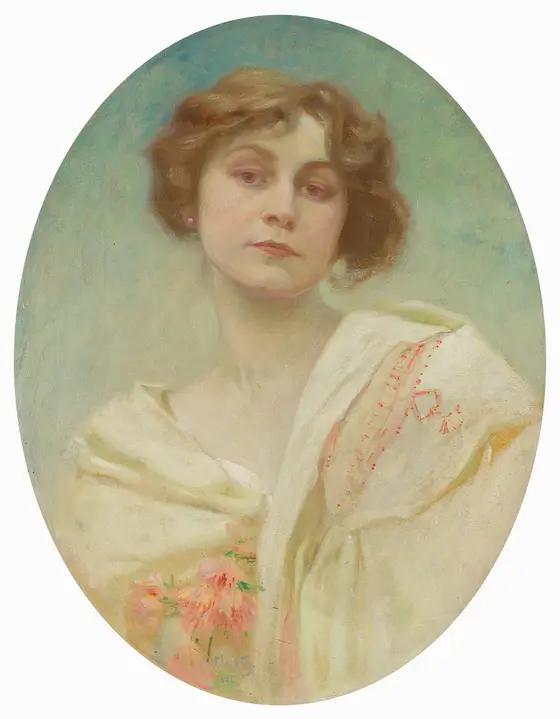
Costume, portrait, and the staging of identity
In Mucha's later portraits, clothing is never only descriptive. It becomes a way of turning a sitter into a bearer of cultural memory and public meaning.
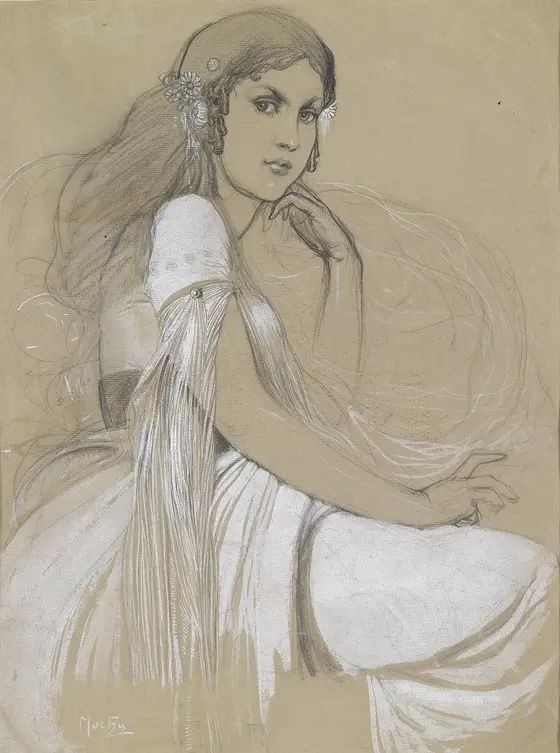
Late Mucha and the turn toward private presence
Mucha's later work often matters most where it becomes quieter. The poster voice recedes and a more concentrated sense of presence begins to carry the image.
Related works
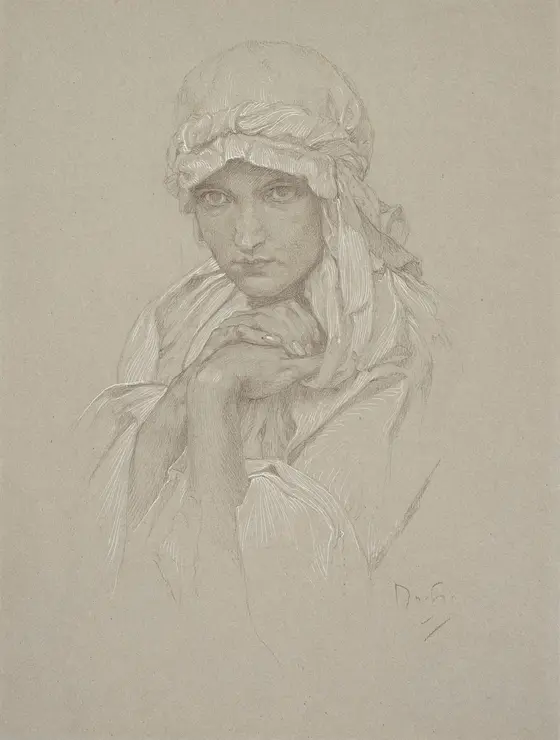
Portrait of the Artist's Daughter in Slavic Dress
A family portrait that joins personal intimacy with Slavic representation and Mucha's later cultural identity.
Jaroslava Muchová
A late portrait of Mucha's daughter in which public emblem gives way to a more concentrated personal presence.
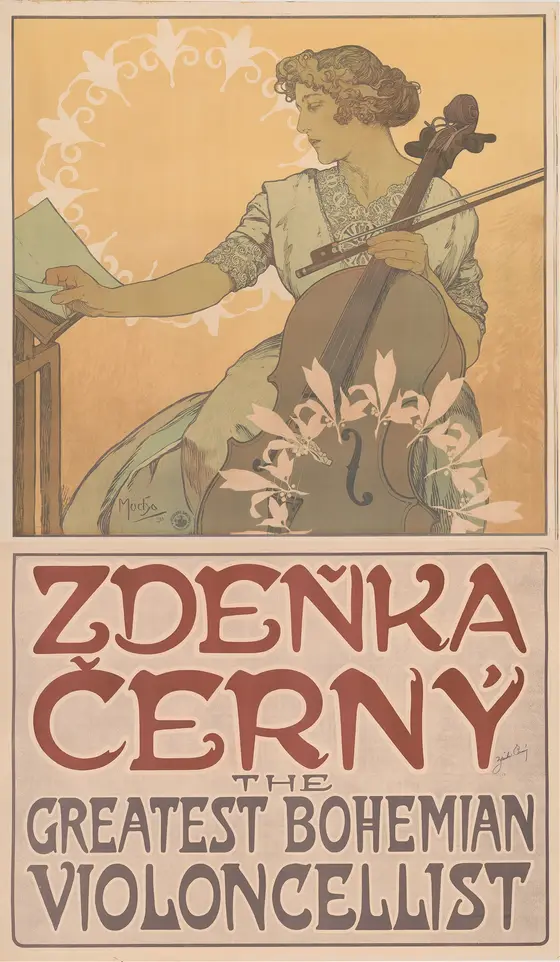
Zdenka Cerny, The Greatest Bohemian Violoncellist
A public musical portrait where the performer is given the dignity and stillness of Mucha's mature style.