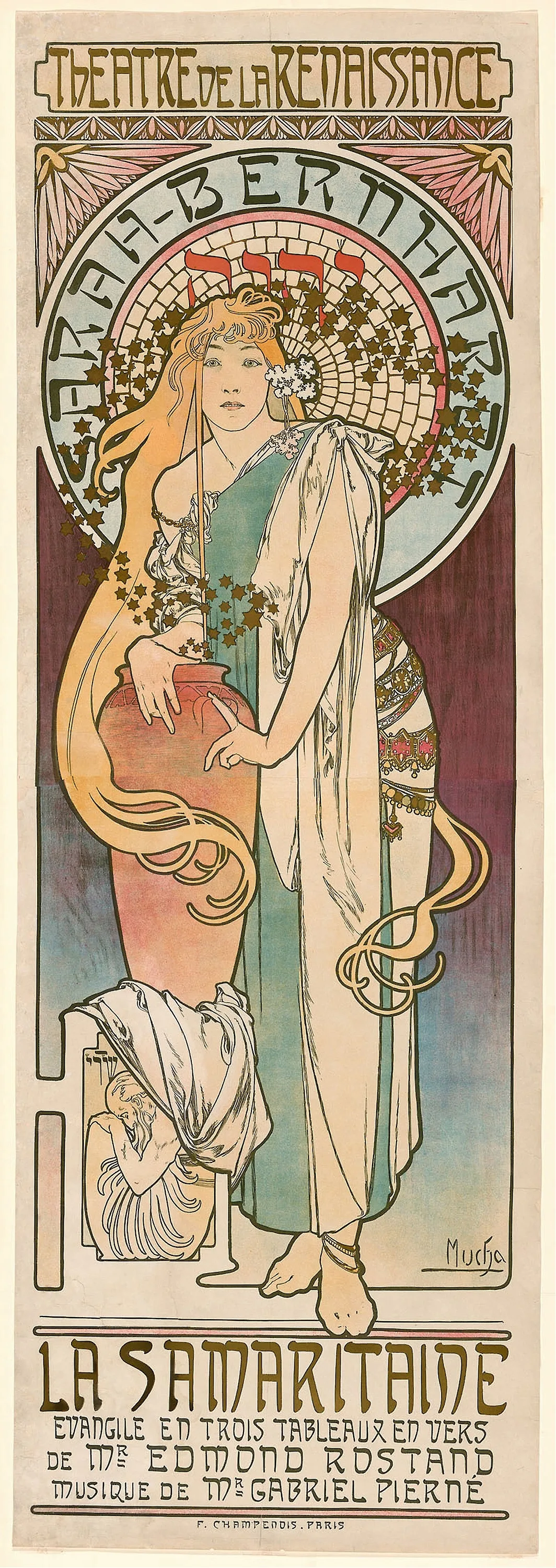
Short object reading
Object note
This page stays close to the sheet itself: composition, historical setting, and the work's place in the archive.
How to read the work
La Samaritaine is one of the clearest demonstrations of why Mucha became one of the defining visual voices of Art Nouveau. The appeal is not limited to the female figure. The real achievement is the way image, lettering, and ornament are composed into a single rhythmic surface.
Historical context
By the second half of the 1890s, Mucha was already an established figure in Paris. Theatre commissions and commercial work gave him space to refine a style that looked luxurious while remaining highly legible in the street. That balance makes this poster especially important.
Place in the archive
For the new version of the project, this work is an ideal entry point. It is famous, visually immediate, and useful for explaining that Mucha was not only a painter of elegant women, but also a master of visual communication.
Go deeper
Related essays
These essays step back from the sheet and open the broader argument around medium, public role, and curatorial context.
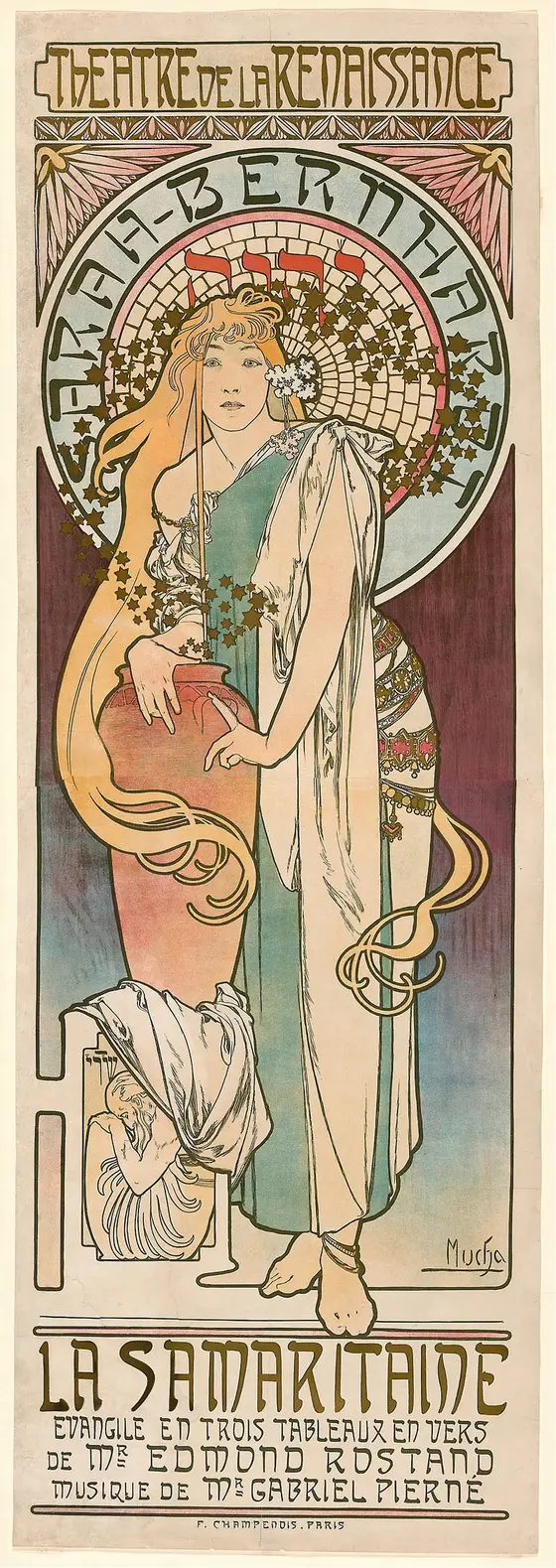
Advertising, theatricality, and Mucha's ability to stop the gaze
Mucha is not only an artist of ornament. He is also a maker of images that can halt the gaze within seconds and construct an aura of exceptionality.
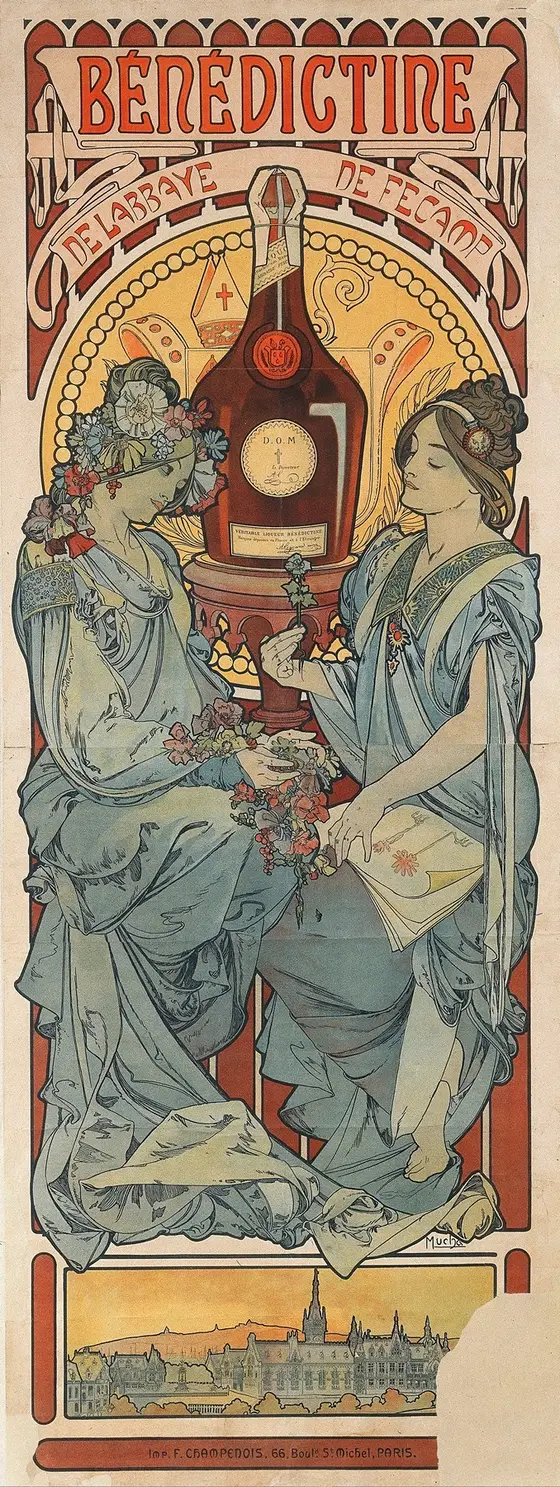
Luxury and public persuasion
Mucha's commercial works matter because they rarely sell through pressure. They persuade by staging luxury, dignity, and the feeling that the product already belongs to a higher cultural register.